AI-Academy
Digital processes property management: Increase efficiency with practical solutions
digital processes property management: Discover field-tested workflows,...
Digital processes in property management replace manual, paper-based tasks with intelligent software solutions. The result is more efficiency, lower costs and a noticeably better service for owners and tenants. For future-oriented managements, this transition is crucial today in order not to lose touch with the market and to counteract the shortage of skilled workers.
To successfully shape the change, you should include the following points in your considerations. These are intended as a guide to approach your transformation strategically and in a practical way:
Incoming post: How many hours per week does manual sorting and distribution really cost?
Invoice verification: Couldn't recurring invoices have been approved automatically long ago?
Damage reports: Do reports still come in chaotically via email or telephone?
Document storage: Can you find every minute and contract in under 30 seconds?
Owner communication: How transparent are current processes for your customers really?
Collection of resolutions: Is your collection digital, searchable and absolutely audit-proof?
Contractor assignment: Is assigning tasks still done laboriously via email ping-pong?
Operating cost accounting: How many manual intermediate steps are required for generation?
Owner meetings: Do you already use digital tools for preparation and follow-up?
Data maintenance: Is your master data consistent across different systems or is it a patchwork quilt?
Platforms like DoNexus address exactly this point. They bundle communication, automate constantly repeating tasks and create a central, reliable database that finally takes the pressure off your team.
Why digital processes are crucial for your property management
The real estate industry is at a turning point. Growing cost pressure, rising expectations of owners and the shortage of skilled workers felt everywhere make the traditional, often reactive way of working simply unsustainable. The introduction of digital processes is therefore no longer a nice option, but a tangible strategic necessity.
Shaping the change now
Imagine acting instead of just reacting. This is exactly what digital workflows enable. Take the time-consuming processing of a simple damage report: in a digital process, the report is recorded directly via a portal, automatically assigned to the correct property and contractor, and every step is documented transparently for the owner. This not only accelerates the solution, but above all builds trust.
Current analyses show how urgently the industry is acting. Over 61% of property managers in Germany already use digital tools, thereby achieving productivity increases of up to 80%. At the same time, 70% struggle with a shortage of skilled workers, which further increases the pressure to automate. Learn more about digital property management and its development in the complete analysis.
The greatest leverage lies in turning reactive tasks into proactive, controlled workflows. This finally leaves more time for personal support of your customers and the truly value-adding work on the property portfolio.
Here is a direct comparison that makes the differences clear:
Traditional vs. digital processes in property management
A direct comparison of the impact of traditional and digital working methods on central management tasks.
Task area | Traditional process (manual) | Digital process (automated) |
|---|---|---|
Incoming post & document storage | Opening letters, scanning, manual sorting into folders. Searching takes minutes or hours. | Documents are captured by AI, automatically assigned and can be found in seconds. |
Damage report | Telephone calls, emails, sticky notes. Status queries cost a lot of time. | Reporting via portal, automatic ticket creation, transparent tracking for everyone. |
Invoice verification | Checking invoices manually, filing, instructing payment. High time expenditure. | Invoices are automatically captured, matched with orders and presented for approval. |
Owner communication | Countless emails and calls. Intransparent who knew what and when. | Central communication in the portal, all processes are documented seamlessly and transparently for everyone. |
The difference is obvious. While manual processes consume time and are error-prone, digital workflows create freedom and transparency, from which the whole team and the customers benefit.
Your strategy for successful digital transformation
Successful digitisation does not start with buying software, but with a clear strategy. It is your roadmap to introduce digital processes in your property management in a targeted and effective manner, to take the team with you and to avoid typical pitfalls. A structured approach ensures that your investments increase efficiency and sustainably improve service quality.
The following infographic shows very well how the transition from manual to automated and ultimately efficient processes succeeds.
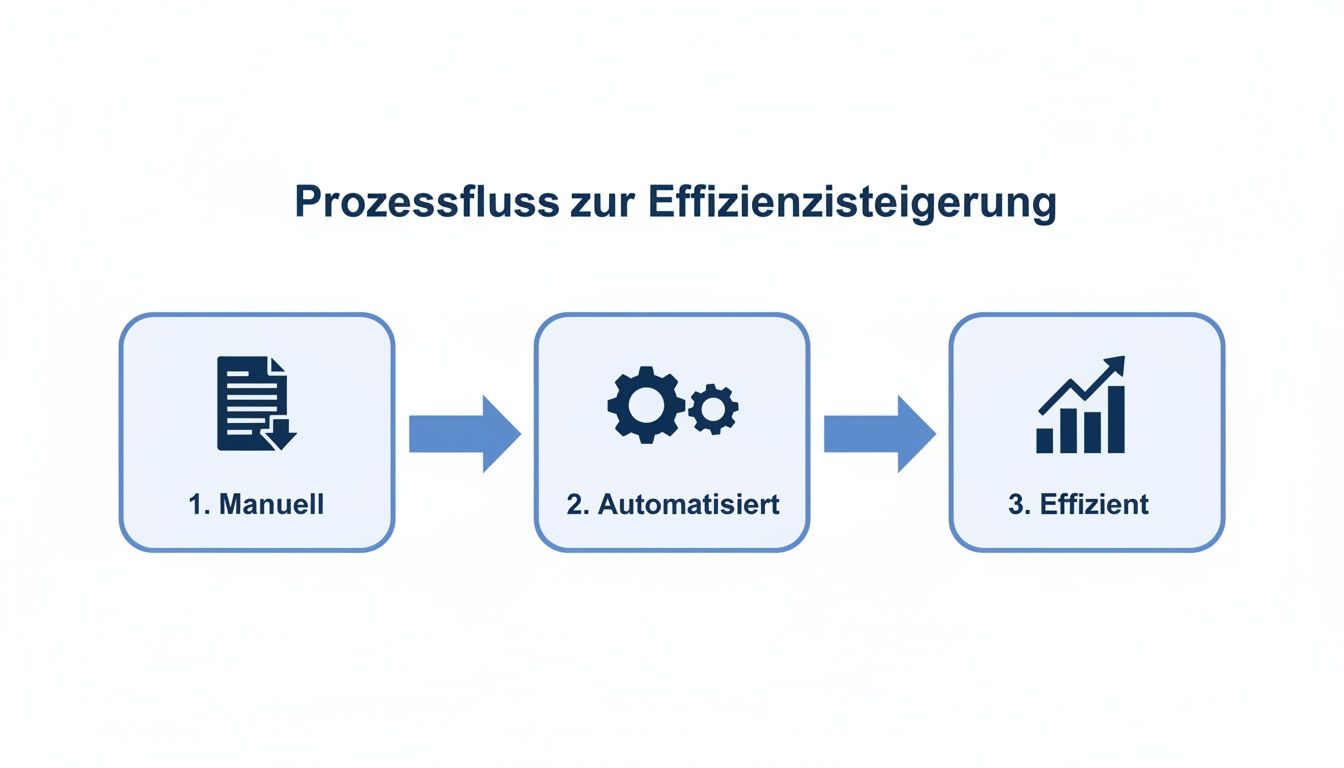
You can clearly see: the transition from manual paper stacks to automated cogwheels leads to measurable efficiency growth. This is exactly the core of digital transformation in property management.
Ten points for your roadmap
To successfully shape this change, you should include the following aspects in your considerations. These points are intended as a guide to approach your transformation strategically and in a practical way:
1. Conduct an honest inventory Analyse your current workflows without bias. Where does your team spend the most time? Which processes are error-prone or lead to regular queries?
2. Set clear priorities Focus on the areas with the greatest leverage. Start with automating incoming post or introducing a digital customer portal to achieve quick and visible success.
3. Define use cases Describe concrete application scenarios. Instead of "improving communication", formulate: "A damage report should be captured via a portal, automatically assigned and the status visible to the owner."
4. Involve the team early on Digital processes only work if they are accepted by the employees. Involve your team in selecting the tools and make the benefits for daily work tangible.
5. Select the right software A good system adapts to your processes. Pay attention to an intuitive user interface, integration capability with your ERP software and reliable support.
A common mistake is choosing overly complex software. Focus on user-friendliness and quick wins to secure acceptance in the team.
6. Avoid data islands Rely on a central platform that bundles data from different sources. A modern API interface is essential to ensure seamless data exchange.
7. Take change management seriously Communicate the "why" behind the new processes openly and offer sufficient training. Plan a step-by-step introduction.
8. Aim for quick wins Start with projects that deliver visible improvements quickly, such as automatic assignment of emails. Such successes motivate for the next steps.
9. Make success measurable Define key performance indicators (KPIs) in advance to measure success, e.g. reducing processing time for invoices by 30%.
10. Consider legal framework conditions Ensure that your processes comply with GDPR requirements and other specifications. This creates legal certainty and trust.
A platform like DoNexus supports you in turning these strategic goals into reality by intelligently networking communication, tasks and documents. With the right customer portal, you can decisively improve communication and transparency and thus create a solid foundation for the future.
Overcoming typical hurdles in digitisation
The introduction of new digital processes is rarely a walk in the park. Resistance in the team and technical challenges are normal. The key is to address these proactively to avoid frustration and ensure the success of the digital transformation in property management.
Here are the top 10 hurdles and how you can meet them to successfully shape the change:
Fear of change in the team: Explain the "why". It is about eliminating annoying routine tasks, not jobs.
Lack of involvement: Turn employees into co-designers. Those who participate in the software selection support the change.
Complex software: Choose intuitive, user-friendly tools. The best software is useless if nobody wants to use it.
Overwhelm by "Big Bang": Introduce new processes step-by-step and celebrate small successes together.
Data silos: Ensure a central platform with interfaces (APIs) to avoid isolated solutions.
Unclear processes: Define clear workflows before digitising them. Technology cannot repair a bad process.
Lack of training: Plan sufficient time and resources for team onboarding.
Data privacy concerns: Choose providers with servers in the EU and GDPR compliance to ensure legal certainty.
No measurable goals: Define KPIs (e.g. processing time) to prove the success of digitisation.
Insufficient support from the provider: Look for a partner who supports you during implementation and ongoing operations.
Platforms like DoNexus attach great importance to precisely this – with high user-friendliness and step-by-step implementation, user acceptance is promoted from the start and typical hurdles are overcome together with you.
Reinventing communication and document filing
Chaotic email inboxes and endless folder structures are the biggest time consumers in daily management life. Digital processes end this chaos by bundling communication and making documents intelligently available. A central platform captures inquiries across all channels, while a digital archive ensures that every document is audit-proof and findable in seconds.
Ten points for future-proof communication and documentation
To optimize these areas in a targeted manner, you should keep the following points in mind for your digital processes in property management:
Bundle channels: Merge email, telephone and portal into one system so that everyone in the team has a full overview.
Think in processes rather than emails: Convert every inquiry into a traceable process (ticket) to create clear responsibilities.
Use AI for classification: Have incoming messages automatically analysed, assigned to the correct property and suggest response templates.
Establish digital incoming post: Scan and have mail automatically read to process data without manual typing.
Build an audit-proof archive: Ensure that your digital archive meets legal requirements (GoBD, GDPR).
Implement full-text search: Find every document in seconds, whether in emails, minutes or invoices.
Create automatic links: A good system automatically links documents with processes, properties and contacts.
Define access rights clearly: Protect sensitive information through a well-thought-out role and rights concept.
Use templates and text modules: Define standardised answers for quick and professional communication.
Ensure mobile availability: Access important documents and communication histories even when on the move.
Platforms like DoNexus integrate precisely these functionalities into one system. With the intelligent document AI from DoNexus, documents are not only archived, but actively integrated into daily work processes, which noticeably relieves management and increases efficiency.
From reactive management to proactive management
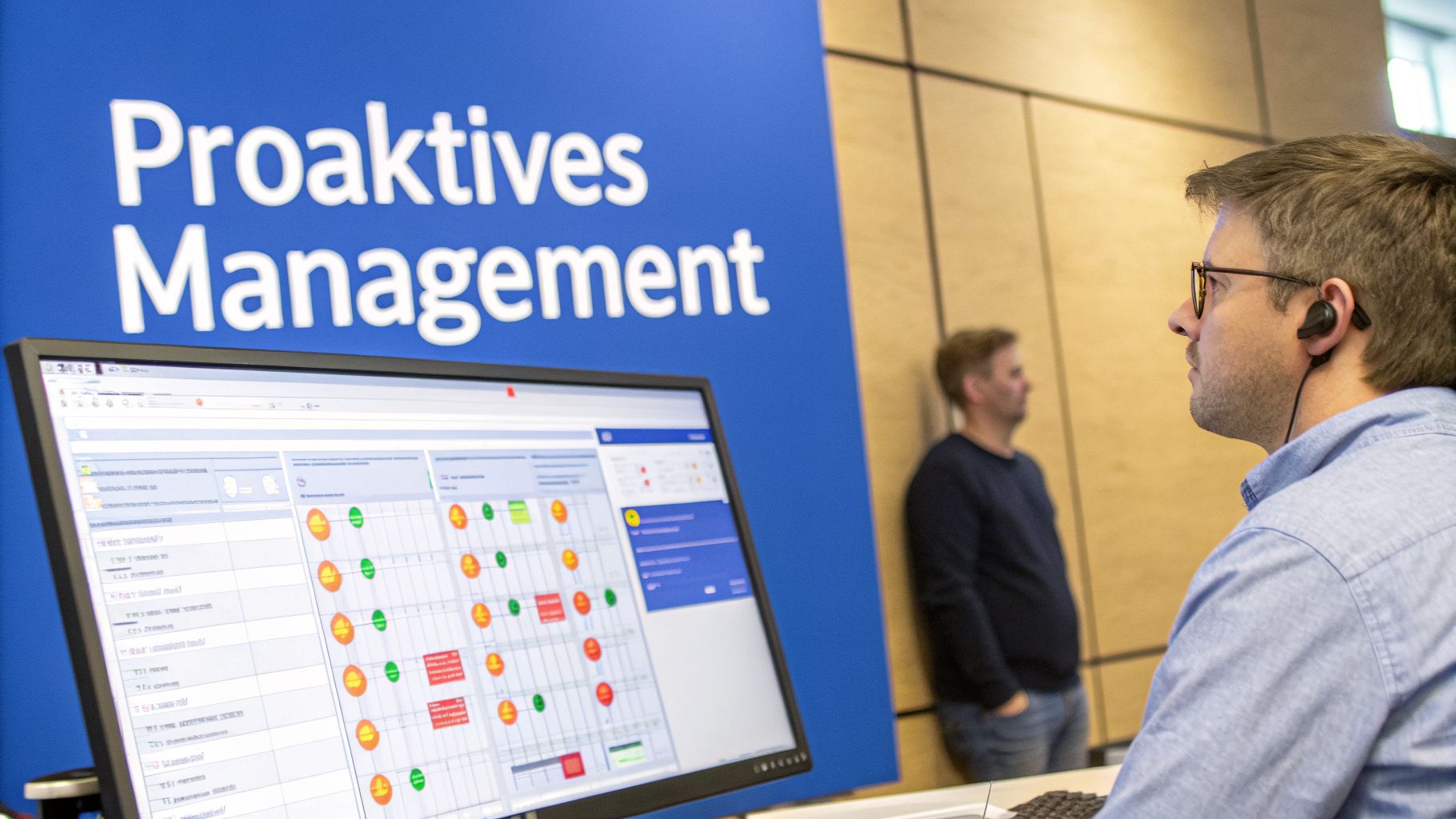
The goal of digital processes goes beyond pure efficiency enhancement: it is the transformation from a reactive to a proactive business model. Instead of constantly reacting to inquiries and problems, an intelligent system enables operational business to be controlled in a forward-looking manner. This frees your team from routine tasks and creates time for the strategic care of your real estate and customers.
If you want to establish proactive management in your property management, focus on these points:
Central task management: Bring all tasks together in one place. Only in this way can you maintain an overview, set priorities and ensure that nothing slips through the cracks.
Automatic deadline monitoring: Let the system monitor all deadlines independently. It reminds employees of deadlines, e.g. in offer tracking or resolution implementation.
Clear escalation rules: Define when and how a process is automatically forwarded to the next level when deadlines are exceeded. This is how you solve problems before they escalate.
Seamless communication bundling: Merge all channels into one system. Every exchange must be seamlessly documented and immediately findable to ensure full context.
Integration of expertise: Also make knowledge about complex legal structures in real estate digitally accessible to enable well-founded and far-sighted decisions.
DoNexus is more than just software – it is an operating system that enables precisely this change. Through the intelligent bundling of all communication channels, central task management with automatic deadline monitoring and clearly defined escalation paths, DoNexus controls your operational business. Learn more about how the AI-supported automation from DoNexus relieves your team and paves the way for real, proactive property management.
Frequently asked questions about digitisation in property management
The switch to digital processes raises many questions. It is not just about new technology, but about how we can work better and optimise service for owners and tenants. In the end, success depends on good preparation, a committed team and practical tools.
Here are the answers to the most urgent questions that we are asked again and again by property managers:
What does digitisation really cost? Costs vary greatly. The trend is clearly towards Software-as-a-Service (SaaS) with monthly fees based on the number of your units. Consider it an investment that quickly pays for itself through efficiency gains.
Does my team need IT training for this? No. Modern software for property management is intuitive and tailored to the needs of management specialists, not IT experts.
How long does it take for everything to run? A single tool is often ready for use in days. A complete system changeover can take a few weeks. Optimised processes often enable initial noticeable success within a week.
Is my data safe in the cloud? Yes, with reputable providers. Look for data centres in the EU, GDPR compliance and modern encryption. These often offer a higher level of security than local servers.
Do I lose personal contact through automation? On the contrary. You gain time for what really matters: personal contact with customers, strategic planning and maintaining your business relationships. Automation creates space for humanity.
These answers show: digitisation is more feasible and advantageous than many initially assume. DoNexus offers a platform that is tailored precisely to these needs – secure, easy to use and designed to quickly deliver tangible value to you.
Discover now how DoNexus makes your property management fit for the future.

Daniel Parak
Founder & CEO
Latest Posts
Discover more posts on our blog