AI-Academy
Stopping the email flood in property management: here's how
Put an end to the email flood property management. Learn practical strategies...
A daily flood of over 200 emails, double-answered queries and lost messages are a bitter reality in many property management companies. This chaos is often the symptom of a deeper problem: trying to manage complex processes with an unsuitable tool – the email inbox. The solution lies in a system change: by using modern software that treats incoming queries as tickets, automatically categorising and prioritising them using AI, reactive chaos is turned into a structured, traceable workflow.
The daily flood of emails: symptom of a deeper problem
A typical morning in property management: the inbox is already filled with over 200 emails. Tenant queries, damage reports, invoices and internal coordination blend into an confusing mountain of tasks. Feeling overwhelmed is inevitable. However, the problem is more than just a full inbox; it is a clear sign of inefficient processes that lead to tangible problems.

Let's imagine an everyday scenario: an owner reports a broken garage door by email. This single message triggers a whole cascade of problems:
Duplicate work: Two motivated employees see the email. One asks for details, whilst the other is already hiring a contractor in parallel – without knowing about each other. The result is confusion and unnecessary effort.
Lost queries: Important additional information from the owner ends up in an employee's personal inbox and is invisible to the rest of the team. Decisions are made on the basis of outdated data.
Lack of transparency: If the owner asks for the status two days later, no one in the team can give clear information because the communication is scattered across multiple email chains. The request seems to have led nowhere.
The constant flood of emails can quickly lead to feelings of overwhelm, which negatively impact productivity and well-being. It is crucial to understand and overcome these feelings of overwhelm in order to minimize invisible costs.
These unstructured processes do not just eat away at efficiency, they also harm service quality and lead to frustration for tenants and owners. Internally, the lack of coordination causes demotivation and a sense of helplessness within the team.
The true cause of the email flood
The flood of emails is therefore only the symptom. The actual cause is the attempt to manage complex administrative processes with a completely unsuitable tool: the classic email inbox. An email program was developed for pure 1-to-1 communication, not for the collaborative, traceable processing of cases. It is not a process tool. To truly solve this problem, a few inbox rules are not enough. It requires a fundamental rethink of how queries are handled in the first place.
5 steps to cope with the flood of emails
In order to regain control over the inbox and increase efficiency, a strategic approach is required. The following steps offer a clear roadmap to direct the property management email flood into structured channels.
Centralise communication: Consolidate all incoming messages (email, telephone notes, portal messages) into a central digital inbox. No more scattered information in individual employee inboxes.
Convert emails into tickets: Treat every incoming query not as an email, but as a task (ticket). A ticket system assigns a unique number to each case and makes the entire process trackable.
Use automatic categorisation: Rely on software that analyses incoming messages with the help of AI. In this way, concerns such as "damage report" or "utility bill query" are automatically detected and assigned to the correct topic.
Prioritise automatically: Let the system assess the urgency of a query. A report of a burst water pipe automatically receives the highest priority, whilst a general query is ranked lower.
Define clear responsibilities: Automatically assign tickets to the correct team or employee based on the category. Manual forwarding is eliminated and everyone immediately knows what needs to be done.
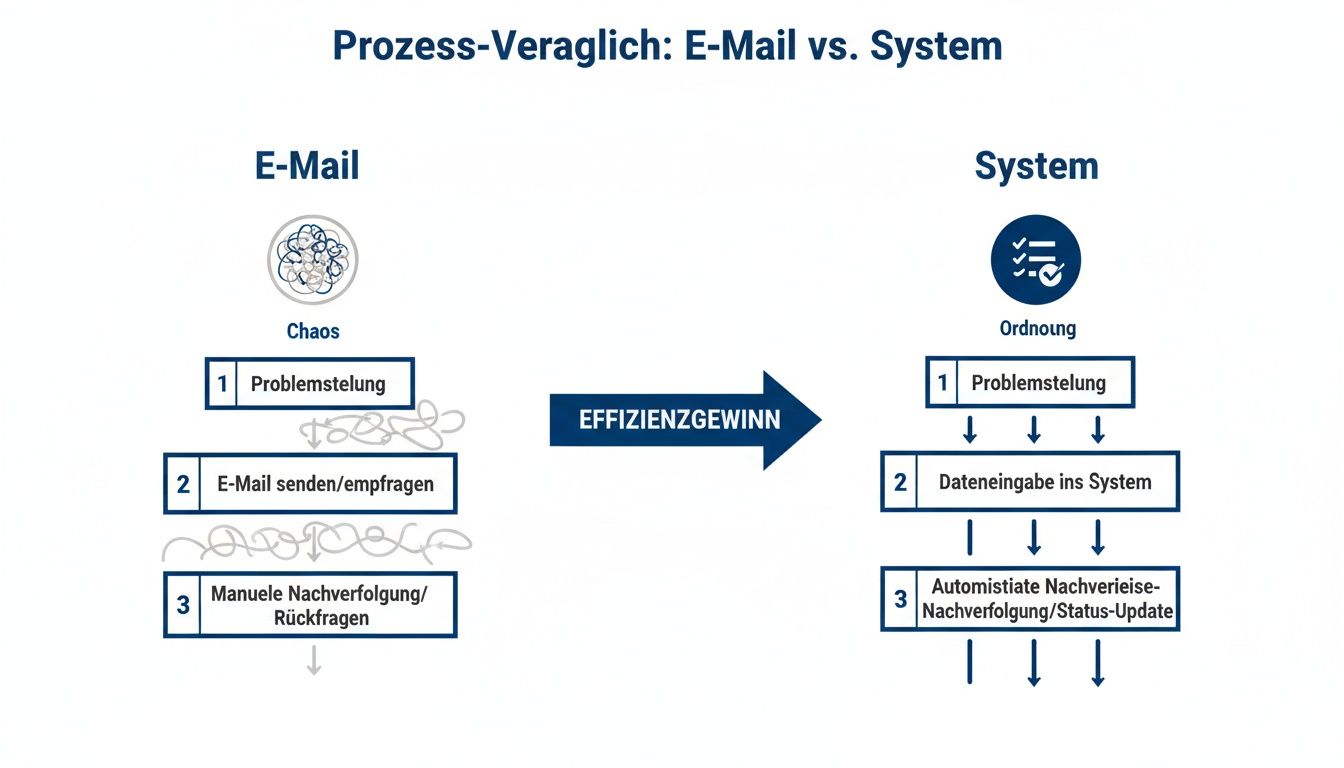
Practical example: how AI automatically assigns queries
Imagine an email arrives with the text: "Good day, at 10 Musterstraße the light in the stairwell is broken." Intelligent software recognises and processes this information in seconds:
Concern: The AI identifies "light broken" as a technical defect.
Property: It links "10 Musterstraße" to the corresponding property in your database.
Category & priority: The query is classified as "building services" with priority "medium".
Ticket creation: The system creates a ticket with all this information and forwards it directly to the responsible technician team.
This automated process relieves your team of time-consuming manual sorting work and ensures that no query is lost.
The logical consequence: a central software platform
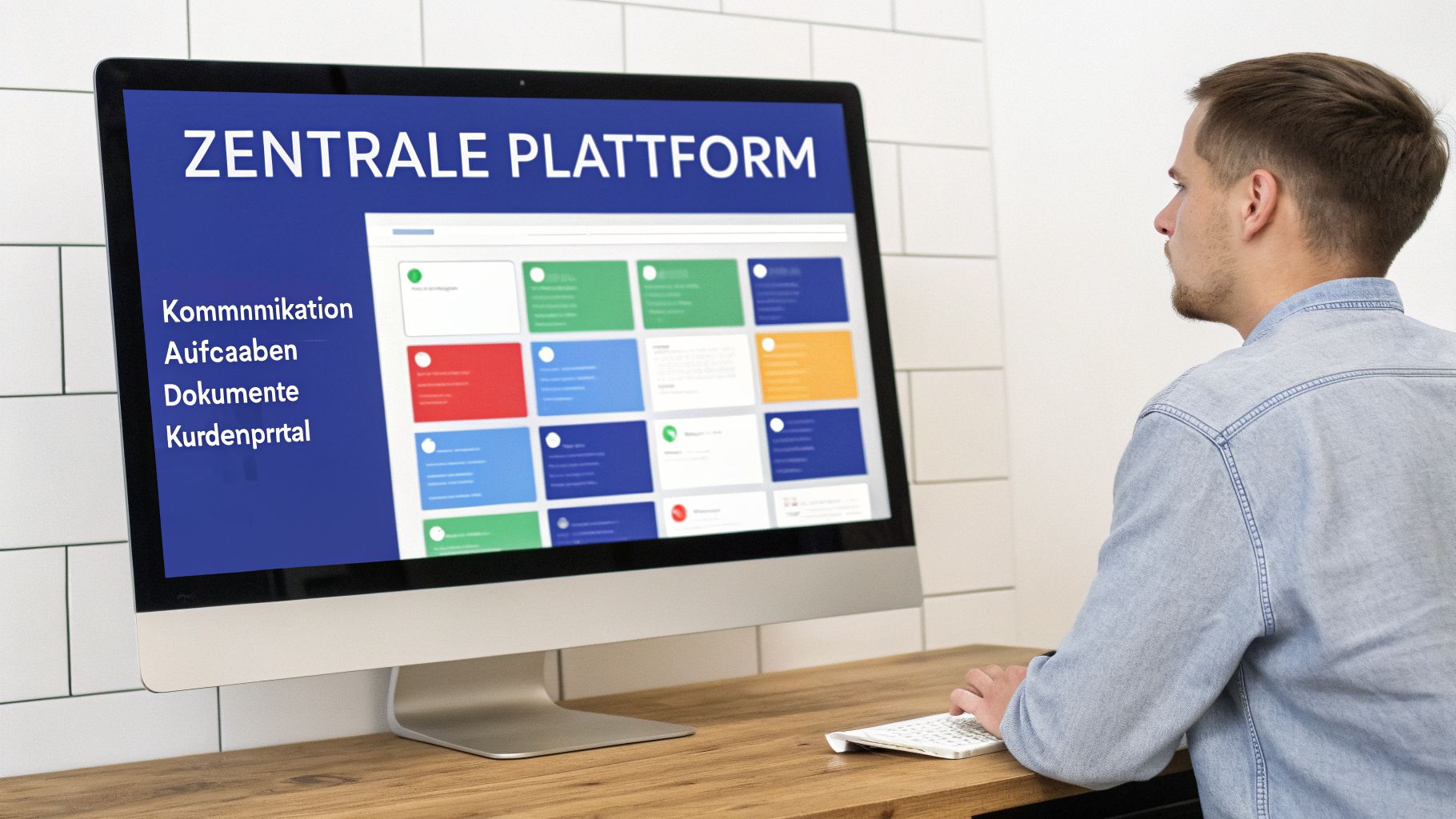
The battle against the flood of emails in property management cannot be won by discipline or inbox rules alone. It is the result of unsuitable tools. The logical and sustainable solution is to switch to a central, intelligent software platform specially developed for the requirements of property management.
Why isolated solutions are not enough
A separate ticket tool here and cloud storage there do not solve the core problem, but rather create new data silos. The real value only comes from an integrated platform that seamlessly connects all the pieces of the puzzle:
Central communication: All channels – email, telephone, customer portal – converge in a single workspace.
Intelligent task management: Every query automatically becomes a ticket with clear responsibility and deadline.
Central document storage: All relevant documents are directly linked to the respective process. More on working with a cloud.
Transparent customer portal: Tenants and owners can view the status of their concerns themselves, which reduces follow-up questions.
The decisive advantage of an integrated platform is that context is no longer lost. Every piece of information, every task and every document is part of a single, traceable process.
Modern software is thus not a luxury, but the logical consequence for any property management company that wants to act efficiently, service-oriented and future-proof. It is the foundation for switching from a reactive to a proactive management model.
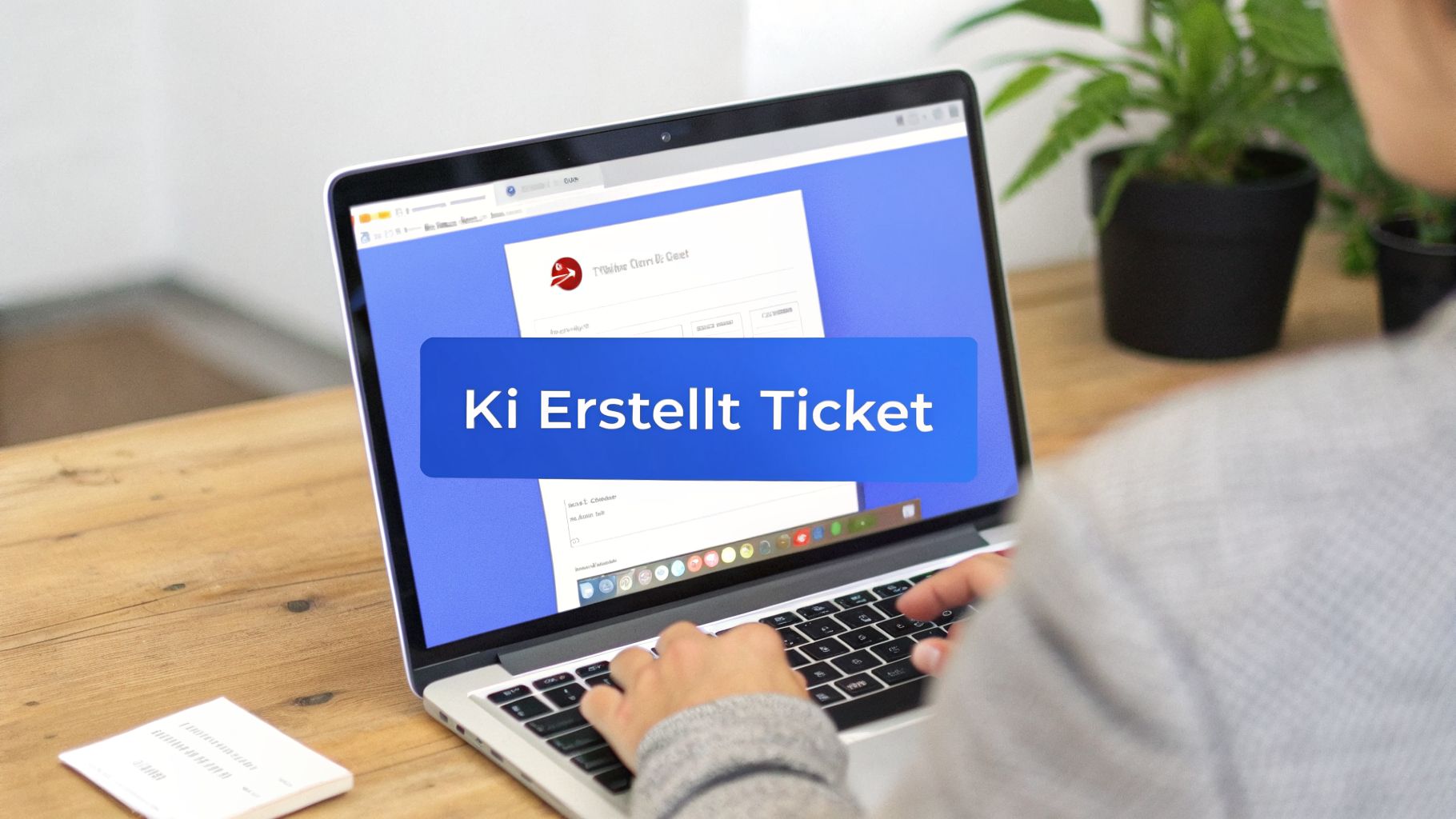
Platforms like DoNexus were developed precisely for this purpose. They use AI to structure communication and automate workflows. Learn more about the practical possibilities in our article on ChatGPT in everyday property management.
Such a system frees your teams from repetitive tasks and creates space for value-adding activities. The increase in efficiency and reduction in transaction costs are direct consequences, as our Transaction Report for Property Management also shows. A transparent customer portal that creates transparency completes the modern service experience.
With a platform specially developed for property management like DoNexus, this change becomes reality. Turn the flood of emails into structured, AI-supported workflows and create space for what really matters. Find out more at https://www.donexus.ai.

Daniel Parak
Founder & CEO
Latest Posts
Discover more posts on our blog